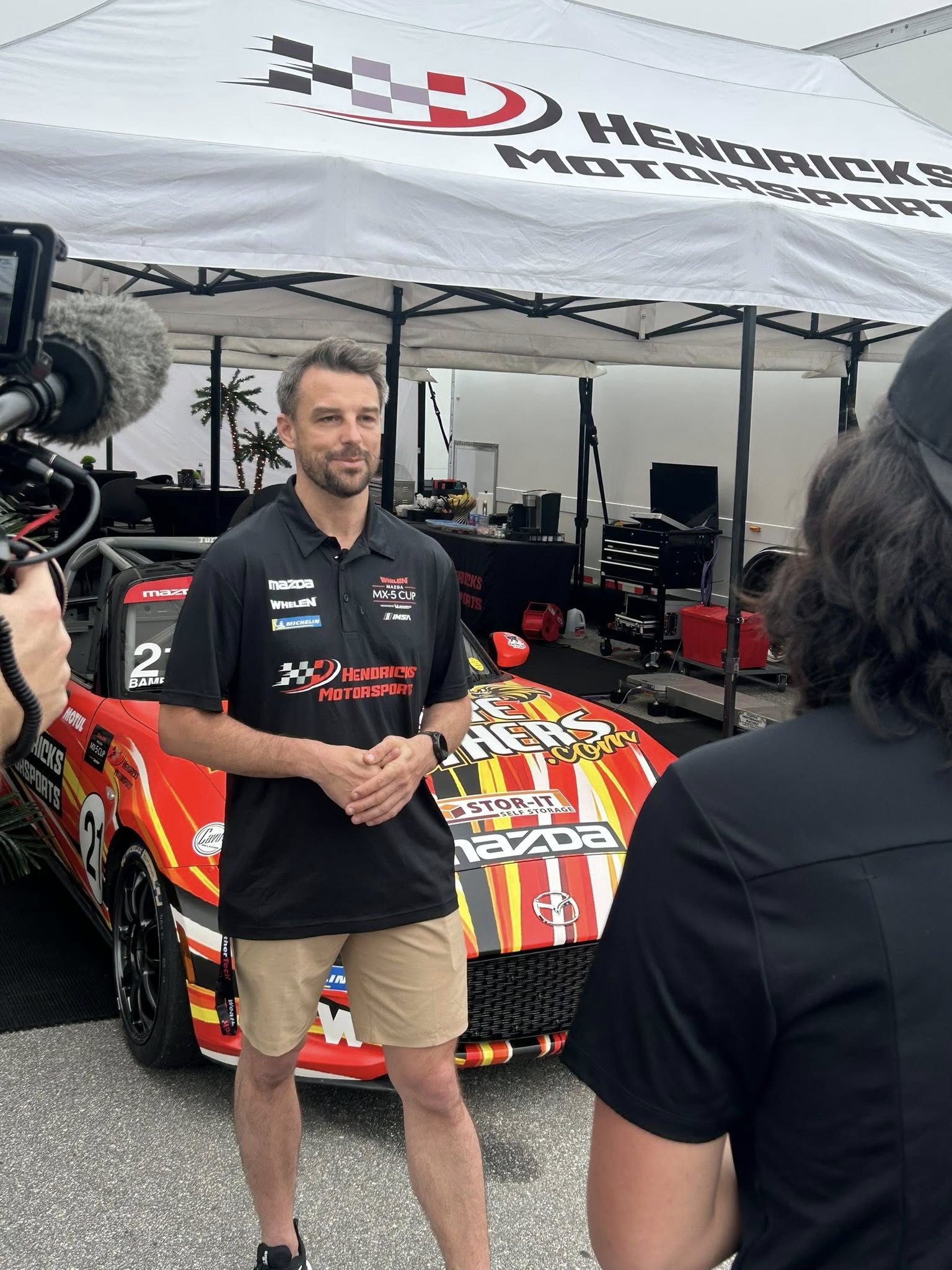
Street races don’t give you many favors. Walls tighten the line, passing zones shrink, and one small hit can turn a good weekend into a long tow back to the paddock. That’s why our Mazda mx5 Cup run on the Streets of St. Petersburg matters to us at Hendricks Motorsports, even before the weekend’s full public story is finished.
We started 18th and finished 8th on a 1.8-mile, 14-turn street course where track position is worth its weight in gold. From the stand, Erik Madsen (our pit boss) kept us calm when the race tried to speed up our decisions. From the pit lane, Kimberly Hendricks (our owner) kept our risk in check because a bent car helps nobody.
As of February 28, 2026, the St. Pete weekend is still playing out publicly. Full official results and incident reports can lag behind the moment. So this is our team-side story and what we learned: what changed during the charge, what we saw in the big late battle, and why we think Gossett has pace no one else has unlocked.
How we climbed 10 spots in a Mazda MX-5 Cup race on the Streets of St. Petersburg
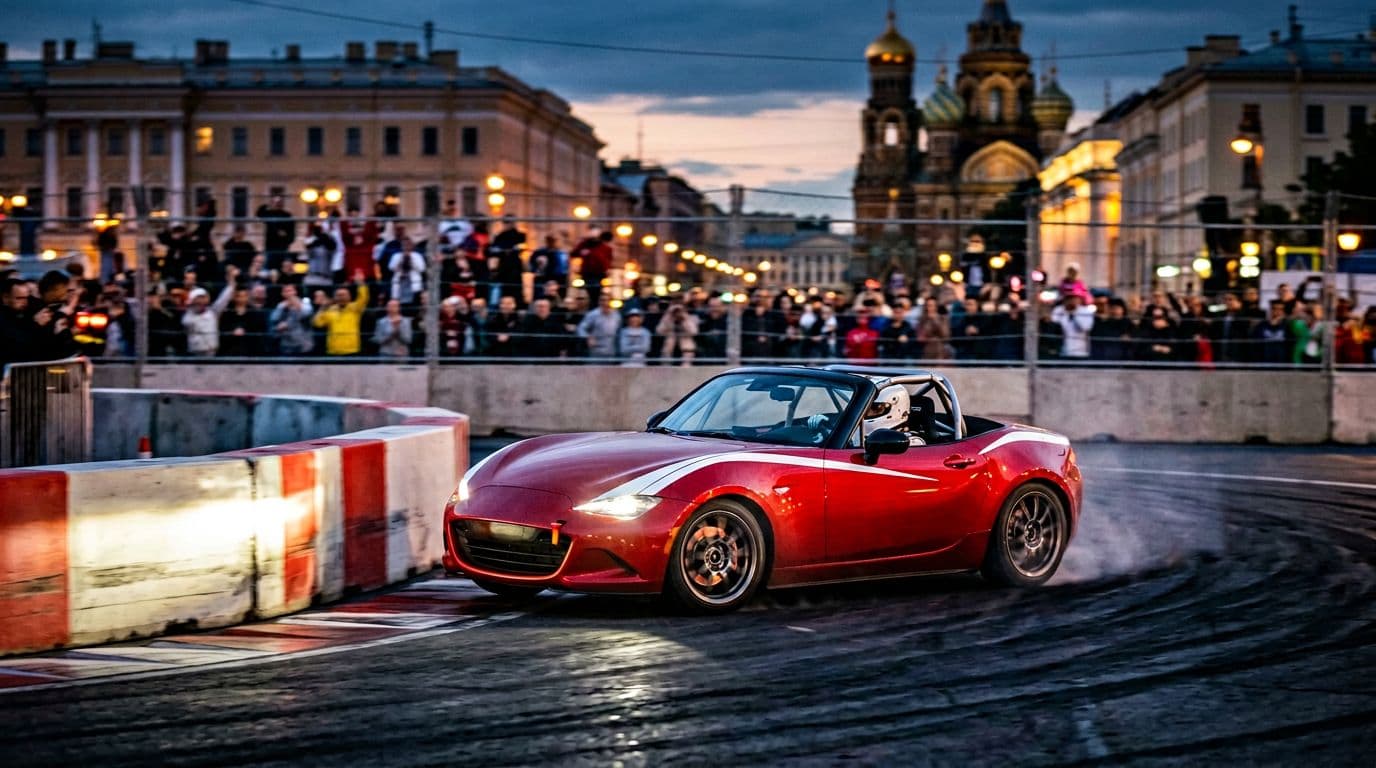 An MX-5 Cup car threading a tight street-circuit corner, created with AI.
The simplest way to explain the 18th-to-8th climb is this: we didn’t try to win the race in one corner. St. Pete punishes impatience. The braking zones are short, the walls are close, and the clean line is narrow. If you over-commit, you don’t just lose time, you can lose the whole day.
Our priorities stayed clear:
- Survive the first phase without damage or penalties.
- Keep momentum through traffic instead of forcing low-percentage moves.
- Use restarts as planned opportunities, not panic moments.
- Take smart chances when the other driver showed the door (and when it stayed open).
On Erik’s radio, the focus stayed on gaps and timing. He watched which packs were fighting, who defended with the nose, and where the tire started to talk back. That matters in an MX-5 Cup field because “fast” and “stuck” can be separated by one bad corner exit.
For readers following along, we keep an eye on the official series posting cadence too. When you want the clean, verified picture, the best reference point is the series’ own Mazda MX-5 Cup results page, which updates as the weekend locks in.
The first laps, staying out of trouble without giving up momentum
Lap one at St. Pete feels like a hallway that suddenly narrows. Everyone brakes at once, the pack compresses, and a small check-up can stack cars like dominoes. In a street race, runoff is rare. A stopped car can block the line you need.
So we aimed for clean air without gambling the car. We defended with the minimum movement, then prioritized exits. That sounds basic, but it’s the whole trick. If you can’t pass into a corner, you can still pressure the exit, make the other driver protect, and then take the next opportunity when their line breaks.
After a close call, we reset fast. Erik’s messages stayed short and clear. The goal was to keep our driver thinking one corner ahead, not one mistake behind.
Street circuits reward drivers who can stay patient at 95 percent, then hit 100 percent only when the track gives permission.
What our pit boss and owner were focused on during the charge
Erik’s decision points weren’t about heroics, they were about rhythm. When we caught a car, he listened for cues: Was the front tire starting to slide on entry? Did we lose rotation in the slow stuff? Were we arriving too hot and killing the exit? If the answer was yes, he’d tell the driver to back the entry up half a step and attack off the corner.
Kimberly’s lens is different, and we’re better for it. She balances our desire to fight with the reality that equipment and reputation follow us to the next grid. Aggression is part of this sport. Still, there’s a line between hard racing and paying for repairs we didn’t need to buy.
The late-race moment everyone will talk about, Earl Bamber’s outside move for 6th and the door in Turns 3 and 4
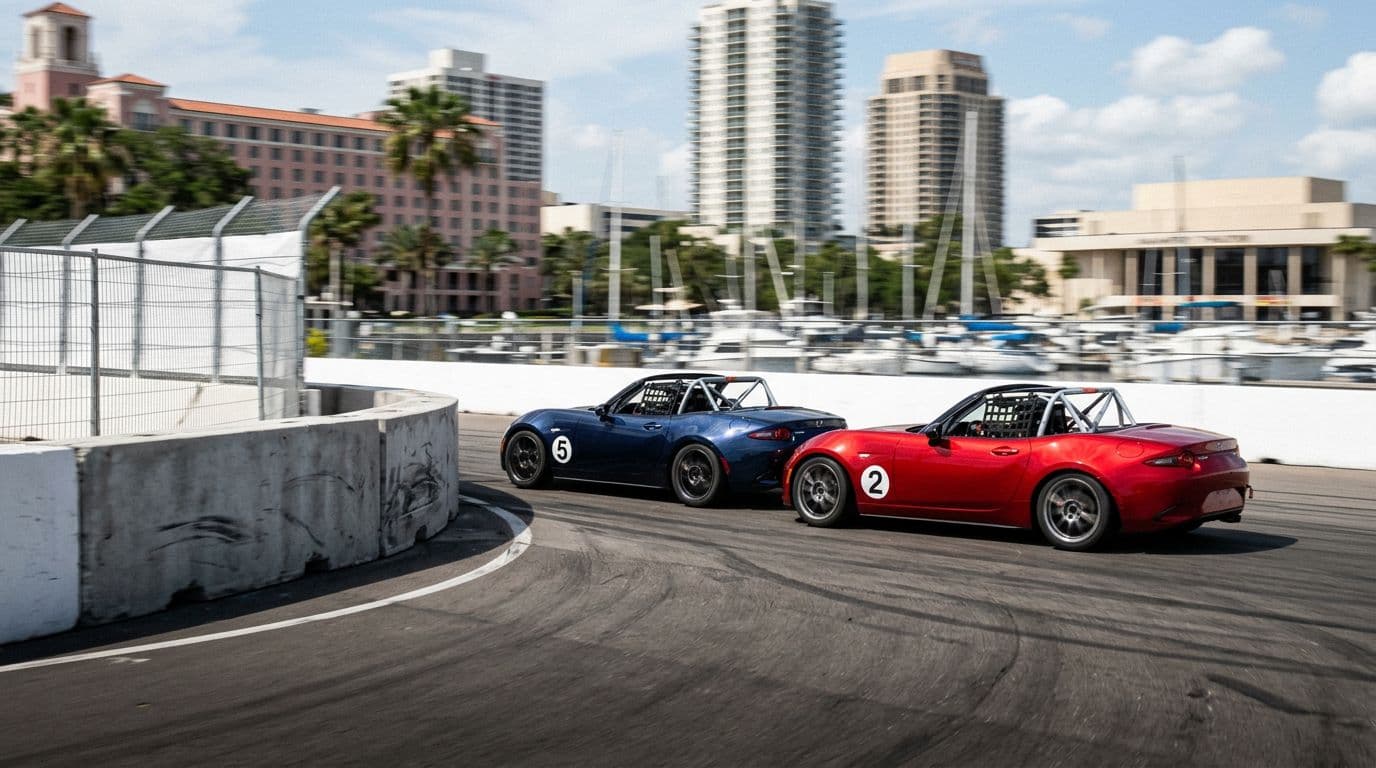 Two cars fighting side-by-side through a street-circuit corner, created with AI.
With two laps to go, Earl Bamber made the kind of move that gets replayed for a reason: a clean pass around the outside into Turn 1 for 6th. It was committed, it was controlled, and it showed total trust in the car and the space.
Then it turned. In Turns 3 and 4, he got “doored,” meaning the other car’s door and our front quarter met when the lane tightened. Earl wasn’t happy. We weren’t either. If you’ve raced, you know the feeling. You do the hard part clean, then you pay the price anyway.
We won’t play prosecutor in real time, especially while the public weekend is still unfolding. What we can say is simple: street racing is physical, but respect still matters. We control our response, we log what happened, and we get back to work.
For broader context on how messy St. Pete can get when the field is tight, it helps to read prior event coverage like a past St. Pete Race 1 recap. The theme is consistent: experience and clean decisions often beat raw chaos.
Why the outside pass into Turn 1 was high-skill, high-risk
On an open road course, the outside line can be workable. On a street circuit, the outside is often dusty, bumpy, and one mistake away from the wall. The braking reference moves because rubber builds on the preferred line. That means an outside pass asks for extra precision.
Earl timed it well. He positioned the car early, braked with confidence, and carried speed without washing out to the barrier. Most importantly, he left space. That’s what makes it a “nice pass” to racers, not just fans.
What “getting doored” changes in a street race, and how we respond
Contact at St. Pete isn’t just a bump, it’s a chain reaction. You can lose momentum, overheat a tire, or pick up steering that’s half a degree off. Even when the car feels okay, the driver has to decide whether to keep pushing or protect what’s left.
Our response is pretty consistent:
- Quick radio check on steering feel and brake confidence
- Watch for tire rub or a new vibration
- Reset goals to finish strong and bank points
We can be upset about contact and still act like professionals. The best payback is a clean finish and a faster next session.
We were quick, but Gossett has found something, what we think it is and how we plan to catch up
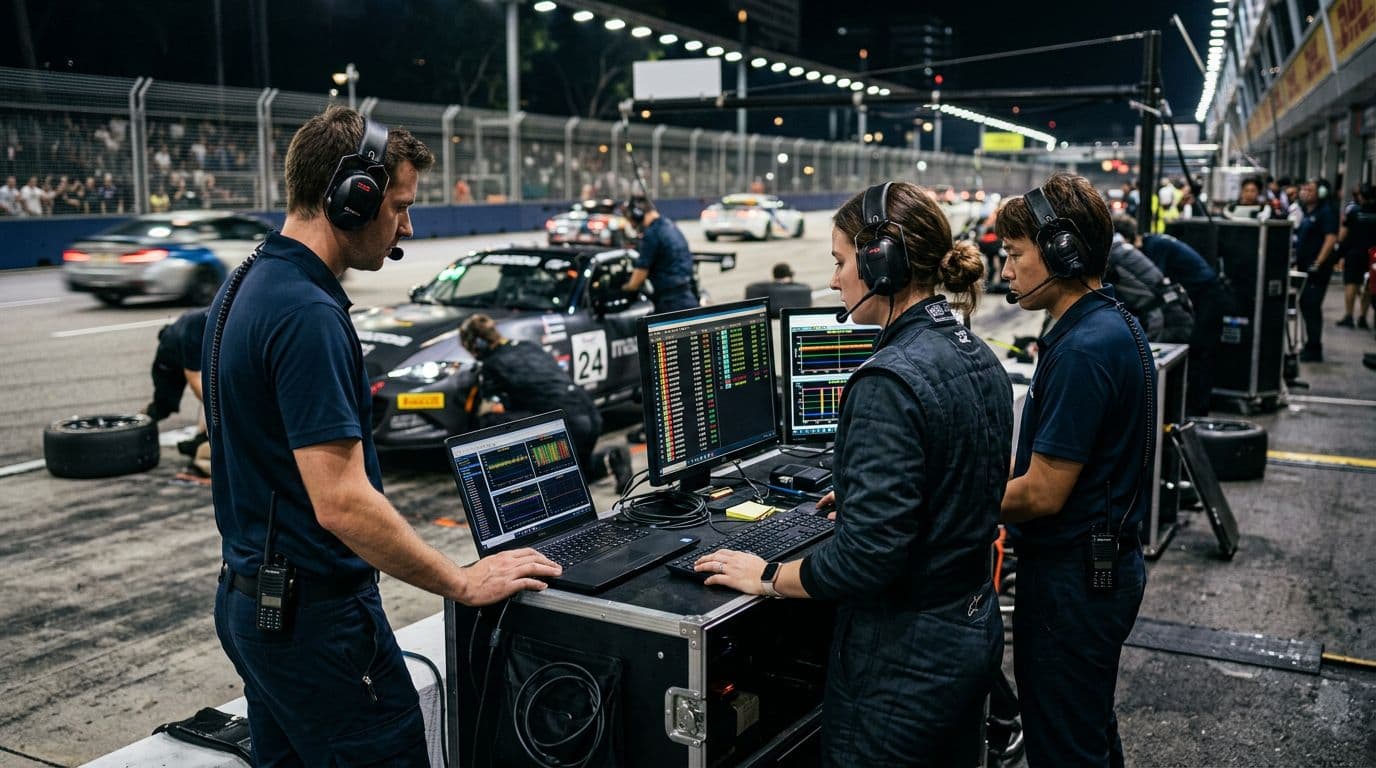 Pit lane focus during a street race debrief, created with AI.
We felt quick, and the charge supports that. Still, it’s hard to ignore what Bobby Gossett is doing. Public weekend notes show he topped Practice 1 with a 1:24.232, and he stayed in the sharp end of the qualifying conversation. That matches what our eyes and timing screens told us: he’s carrying speed in places where most of the field gives it up.
When we want to ground our read in the bigger picture, we also watch the official points flow and weekend context through the 2026 standings page. It’s not about worshipping a table, it’s about understanding where risk makes sense.
So what’s “something” at St. Pete without blaming parts, tech, or luck? On a spec-ish platform, it’s usually execution:
- Brake release: coming off the pedal smoothly so the front stays loaded.
- Minimum speed: not over-slowing the center of key corners.
- Curb usage: using just enough without upsetting the car.
- Rotation on entry: getting the nose pointed early.
- Exit drive: earlier throttle pickup without wheel spin.
Street-circuit speed usually comes from small gains in a few corners
Lap time here doesn’t hide evenly around the lap. It shows up in clusters. Find two tenths in three corners and you look like a magician. Miss one exit onto a straight and you bleed it all back before the next brake zone.
We look for repeatable time, not a single hero lap. That means comparing our best laps to our average “raceable” laps. It also means paying attention to where we lose time in traffic, because passing at St. Pete is often about forcing the other driver to compromise their best corner, then capitalizing one turn later.
Our plan for the next session, data, setup notes, and driver approach
Our next steps are practical and quick. We’ll compare braking traces, throttle pickup points, and steering rate to see where we ask too much of the front tire. We’ll also review onboards to confirm whether our line choices match what the car wants.
Because our day-to-day work lives in WordPress ecosystems, we also treat race learning like structured training. In our internal debrief process, we keep notes tight, share clips with the right people, and organize feedback so it’s searchable later. That same mindset is why learning platforms like LifterLMS put so much emphasis on reporting, progress tracking, and private content areas. The tool is different, but the point is the same: turn raw activity into usable improvement.
Then we’ll make small, intentional adjustments. We won’t chase a setup lottery. Instead, we’ll pick one or two changes that help rotation or stability, confirm tire pressures and temps, and go back out with a clear passing plan.
Conclusion
The 18th-to-8th run proved our race pace and discipline in a place that punishes rushed decisions. The late “door” stings, but it also sharpened our focus on what we can control. Most importantly, we have a clean plan to close the gap to the front runners, including Gossett, by hunting time in a few key corners and executing better in traffic.
We’ll keep telling this weekend from the Hendricks Motorsports side, honestly and with receipts. If you’re watching St. Pete unfold, stay with us for the next update, because the next step is turning speed into results.